
Developer Showcase Series: Carly Huitema, Manager, Agri-food Data Strategy, University of Guelph
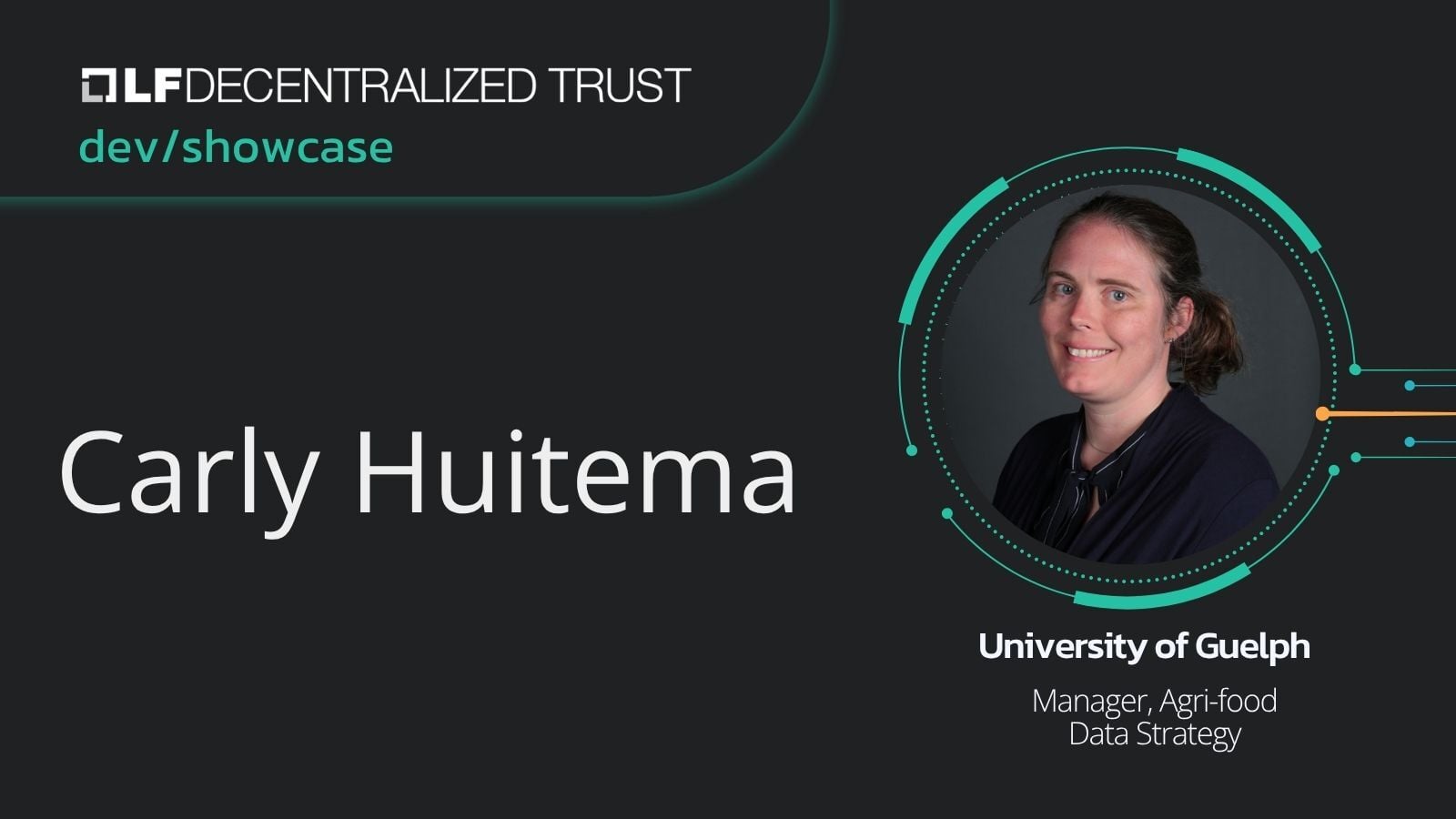
Back to our Developer Showcase Series to learn what developers in the real world are doing with LF Decentralized Trust (LFDT) technologies. Next up is Carly Huitema, Manager, Agri-food Data Strategy at University of Guelph.
Give a bit of background on what you’re working on and how you got into decentralized technologies.
Right now, I am working with a team on improving research data management. Research data is a valuable output, and we want to help researchers do a better job describing, managing, and sharing it. The research data ecosystem is highly decentralized, so I enjoy bringing ideas, technologies, and approaches I've learned through LF Decentralized Trust into the research data space.
I got into decentralized technologies while managing the Waterloo Centre for Microbial Research, a virtual microbiology research data centre at the University of Waterloo. During the COVID-19 pandemic, we were looking at better ways to manage documentation, evidence, and trust for our research outputs and the wider community. That work introduced me to Trust over IP and the broader decentralized trust community.
How are you involved in the LF Decentralized Trust community?
I am involved with Trust over IP as Co-Chair of the Steering Committee and, until recently, Co-Chair of the Ecosystem and Governance Working Group. I also participate in several other initiatives, including Bite Size Trust, an educational effort that helps make decentralized trust concepts more accessible.
One of the things I enjoy most is participating in discussions about ecosystems and system architecture, governance, and how different technologies can work together to support trusted digital interactions.
Why did you choose to become involved?
I wanted to contribute to making these kinds of decentralized technologies easier to adopt and use so that more things could be built using them.
Tell us about your experience contributing to the LF Decentralized Trust community.
Much of my contribution has been through community building and governance. I participate in working groups and task forces, contribute to discussions, help organize meetings and workshops, and work with others to develop training, frameworks, and governance policies.
One of the things I enjoy most is working together with people from different backgrounds, industries, and perspectives to tackle shared challenges. I have learned a tremendous amount from the community and appreciate how willing people are to share their expertise and engage in thoughtful discussion.
Why is contributing important?
Contributions are how knowledge advances. In research, progress happens because people share methods and results. Open source and open standards communities work much the same way. No single organization can solve complex trust and governance challenges alone. By contributing, we hopefully create technologies that are more interoperable, practical, and widely adopted.
What developments are you most excited about?
I am particularly interested in AI, research data, and decentralized trust. Research is heavily dependent on provenance and reproducibility, but current systems are straining under pressures from new technologies. As AI becomes more integrated into the research data ecosystem, understanding the provenance, quality, and governance of information becomes more important. Technologies that help establish trust in data and evidence will become critical infrastructure, and I want to be a part of building the foundations at Trust over IP.
How can others get involved?
Start by joining conversations. Working groups and task force meetings are public and welcoming places to learn and ask questions. Many people assume they need deep technical expertise before they can contribute, but communities also need people with experience in governance, policy, education, user experience, operations, and domain-specific fields. The best way to get involved is to find a topic that interests you and begin participating. Don't wait until you feel like an expert.
What is the best piece of developer advice you’ve ever received?
You get what you select for. Granted it was advice for protein engineering, but it applies in so many other places. Your metrics (whether you deliberately picked them or not) will drive what is enriched.
What technology could you not live without?
Haha. I’m a microbiologist so I am going to go with the very centralized technology of public sanitation! Beyond that, in working groups I am appreciating the use of AI in summarizing meetings and contributing to other necessary but tedious paperwork.
Anything else you'd like to add?
My career has crossed microbiology, research infrastructure, data management, and decentralized trust. One lesson I've learned is that innovation often comes from connecting ideas across disciplines. Communities like LF Decentralized Trust create opportunities for exactly those kinds of connections.